Skip to content

Case study · Bangladesh

Priyanka Runway City, Dhaka

S&T Enterprise ran a live, public demonstration of SoilBinder® inside a working residential development north of Dhaka. Nothing about the site was chosen to flatter the technology: the ground is sandy soil — the harder end of the range for a stabilizer — and the finished roads were left to sit through a full rainy season before anyone came back to look.

Roads built
2
Total length
260 m
Ground
Sandy soil
Verified after
3 months
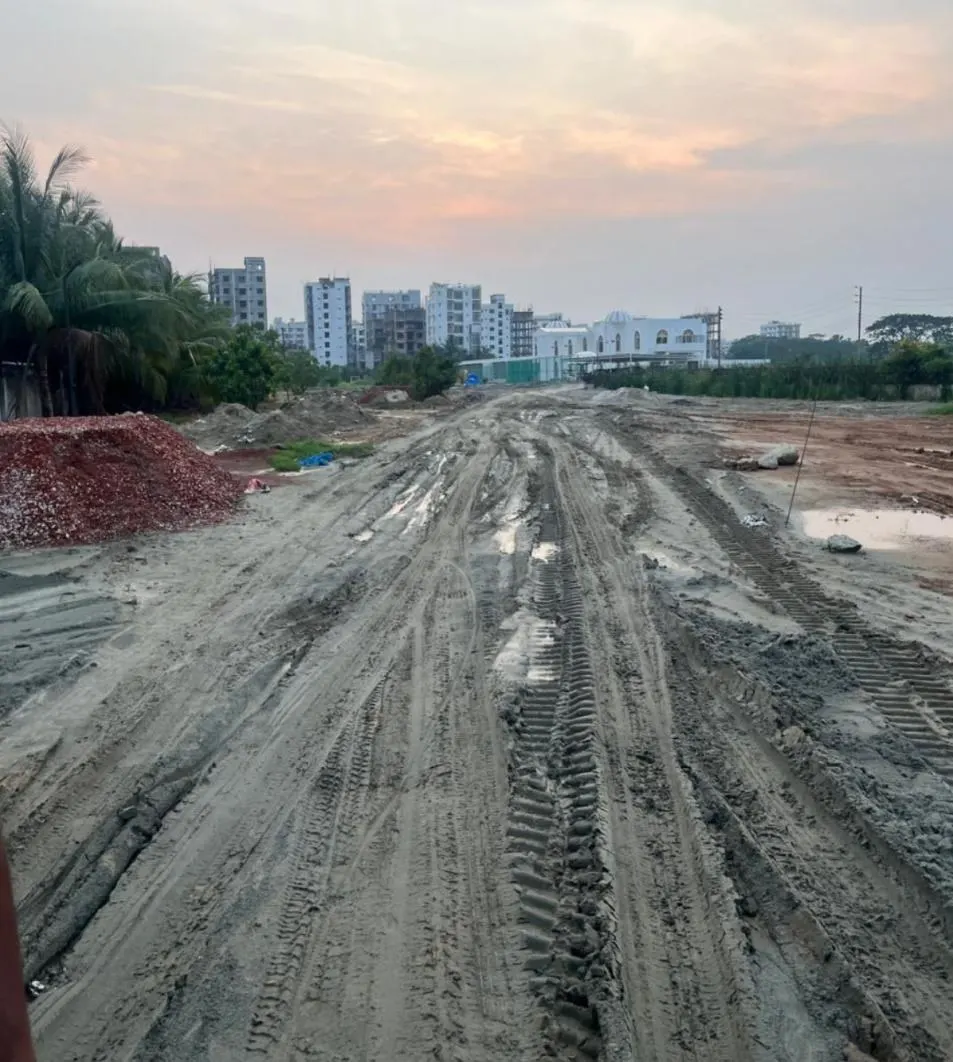
Chairman Bungalow Road before treatment — churned sand and soil, rutted by plant tracks and standing water.
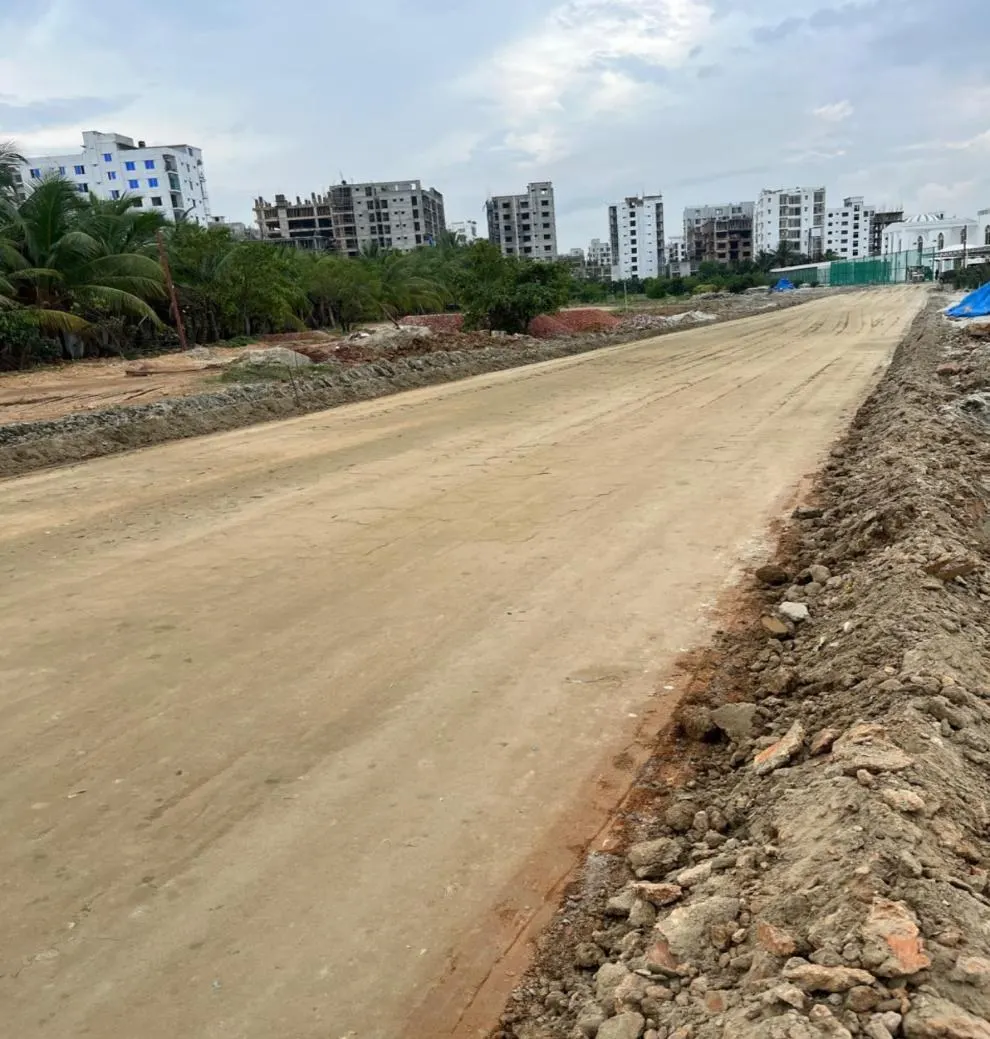
The same alignment three days later — a smooth, crowned SoilBinder-stabilized road base.
Day 0 Day 3
Drag the handle. Left is Chairman Bungalow Road on day zero; right is the same alignment three working days later.

Site A — the 150 m road

  • 150 m length
  • Sandy soil
  • 30 cm treatment depth
  • Traffic on day 2

Day one opened with a survey of the soil. Sandy, loose, and by the crew's own assessment "a little bit challenging for SoilBinder" — exactly the honest starting point a demonstration needs.

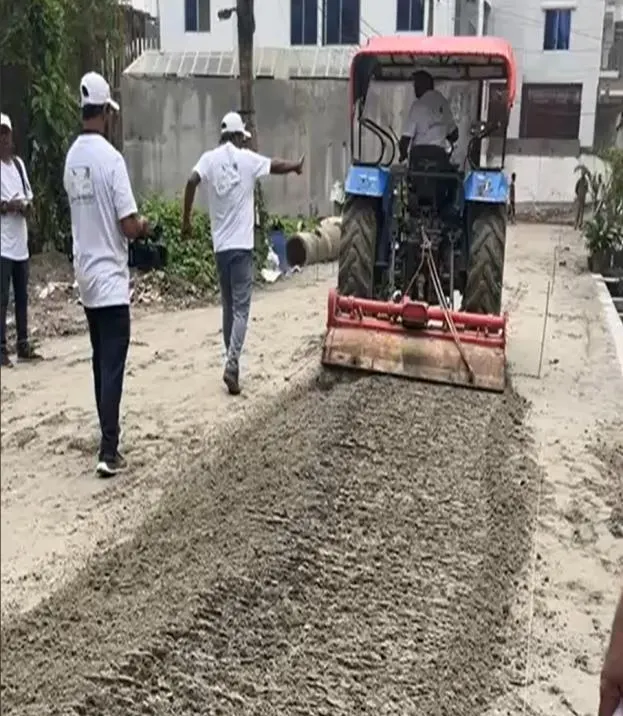
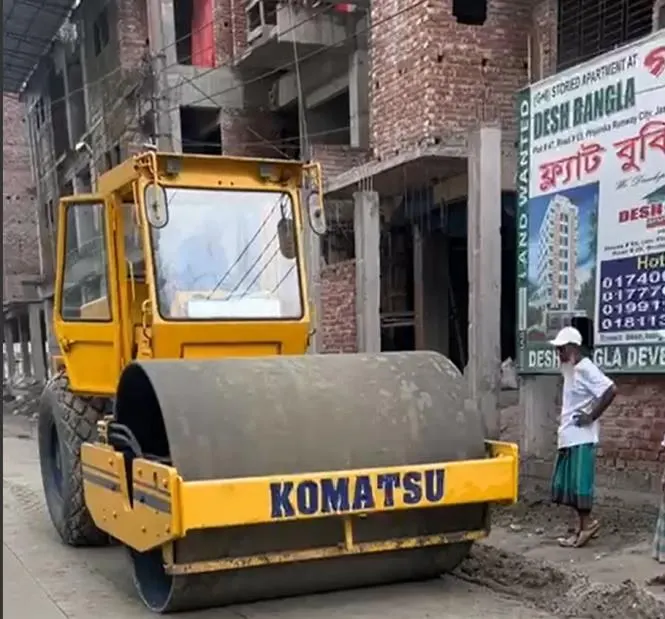
The tractor ploughed to 30 cm. Cement and SoilBinder® went in, were mixed through the full depth, and the soil compactor began rolling the same afternoon. By day two the pneumatic roller had sealed the surface and the road was carrying vehicles.

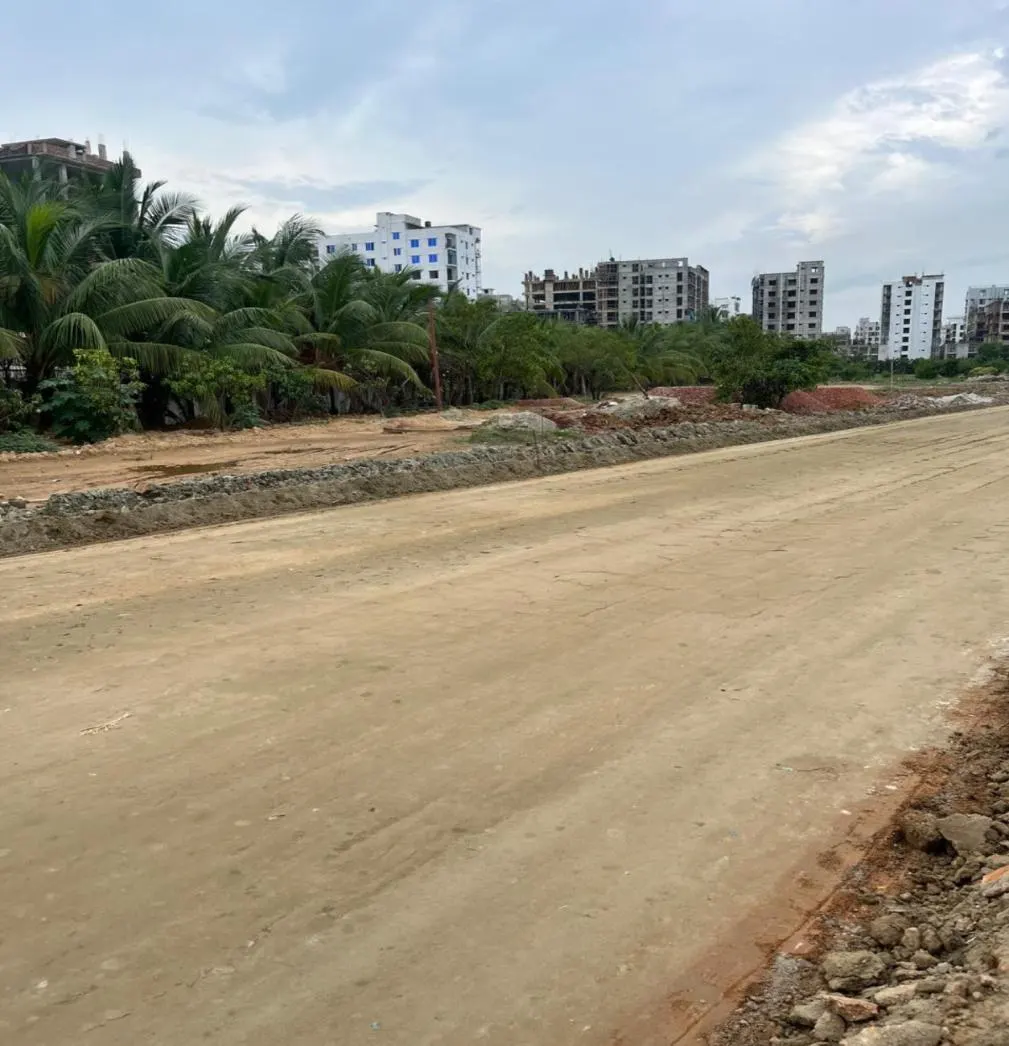
Three months and one rainy season later, the road came back compacted, intact, and still shedding water.
Site B — Chairman Bungalow Road

  • 110 m length
  • Mixed soil and sand
  • 3 working days
  • Paver blocks on top

The second road ran past the chairman's bungalow — a mixed soil-and-sand track that turned to slurry in the rain. Work started with the same ploughing pass, then cement bags dropped along a measured grid.

Over days two and three the soil compactor did the initial compaction, the motor grader cut the crown, and the pneumatic roller finished it. Three days, start to finish.

Three months on, the base was sound enough to take paver blocks laid straight onto it — no sub-base, no soling, no rebuild.

Machinery on the demonstration

All mobilized by S&T Enterprise

  • Tractor and rotavator

    Tractor and rotavator

  • Vibratory soil compactor

    Vibratory soil compactor

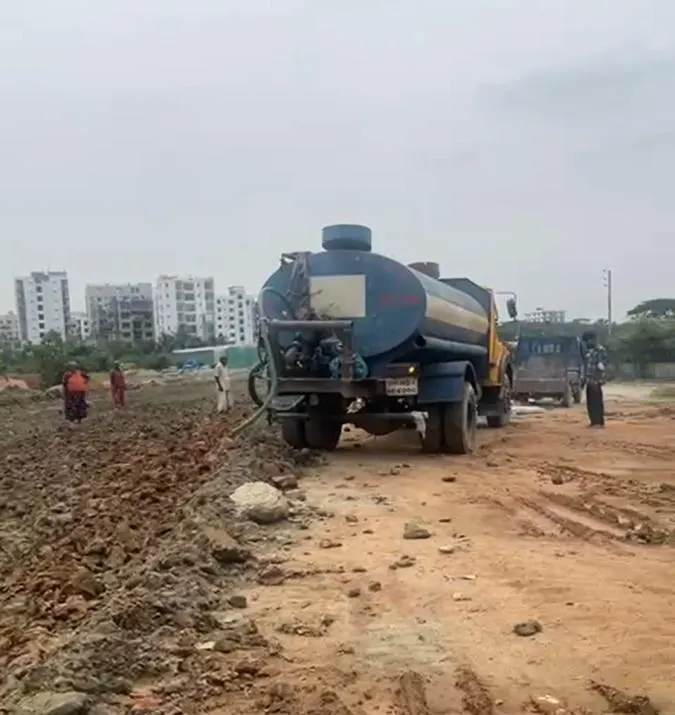
  • Water bowser

    Water bowser

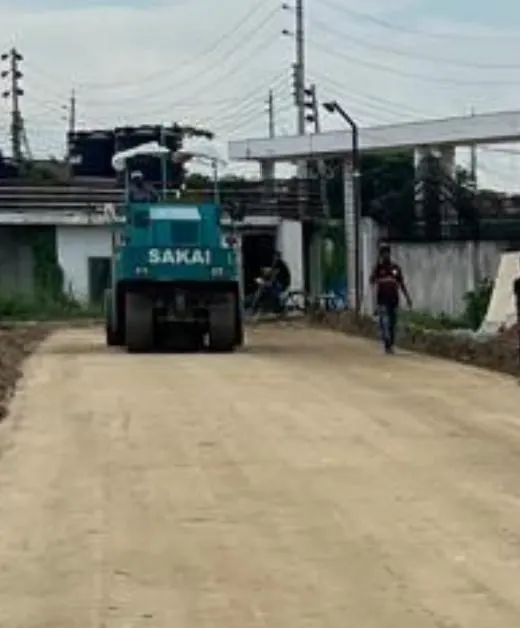
  • Tandem / pneumatic roller

    Tandem / pneumatic roller

Proven elsewhere

The same chemistry, on four continents, in worse conditions than yours.

Bangladesh is where we build it. These are the reference projects that told us it would hold — including one that spent four days underwater.

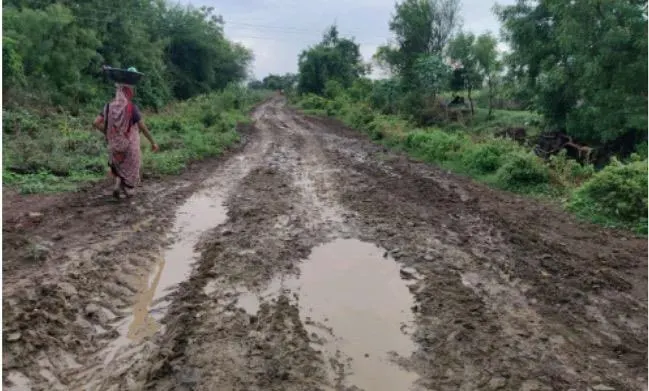
A rural Indian road churned into deep mud during the rainy season, before stabilization.
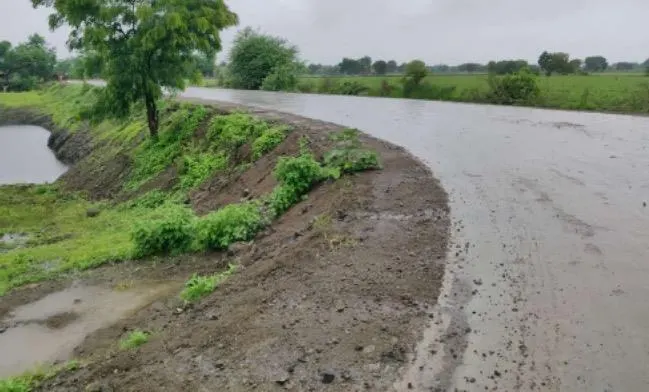
The same alignment after SoilBinder stabilization — a firm, smooth surface shedding rainwater.
Before After

India · the flood test

Four days under water. No cracks.

A stabilized section was fully submerged for four days. When the water dropped, the shoulders had eroded — but the road surface came out free of cracks, and the stabilized base stood exposed and intact exactly where the current had cut around it.

For a delta country with a monsoon, that is the only durability test that matters.

United States

Full-scale mechanized construction

A modern train of reclaimer, water tankers, dry-additive spreader, 12-tonne smooth-drum compactor, motor grader and pneumatic compactors stabilizes roughly 3,000 m² per eight-hour shift.

Colombia

A gravity retaining wall from stabilized soil

Designed and built to Colombian regulations: soil mixed with SoilBinder®, placed in formwork, compacted in lifts, and struck to a finished gravity wall — with a road running along the top of it.

Niger

Housing without concrete

A stamped-earth house built from 70% laterite, 27% sand and 3% cement with SoilBinder®: concreteless foundations, in-situ material, and a finished structure that used six tonnes of cement in total.

Bangladesh

Blocks and bricks, tested locally

Soil, sand and SoilBinder® pressed into blocks on site and sent for engineering materials testing — a route to walls and paving that skips the kiln entirely.

The same method, on your alignment.

Send us the road length, the soil and the programme. We will come back with a design depth, an additive rate and a schedule.