
The flagship
The cheapest aggregate on any site is the ground already under it.
SoilBinder® is a liquid concentrated soil stabilizer from Dutch Agro. Mixed into the ground with a small percentage of cement or lime, it builds a road base out of the soil already on site — no quarried stone, no sub-base, no brick soling.
- Cost saving
- 15–30%
- Build time
- ~50% faster
- Service life
- 2–3× longer
- Soil classes
- 16 of 17
SoilBinder® is a liquid concentrated soil stabilizer from Dutch Agro. Diluted with water and mixed into the ground with a small percentage of cement or lime, it lowers the soil's liquid limit and plasticity index, raises its unconfined compressive strength, and makes it impervious to water.
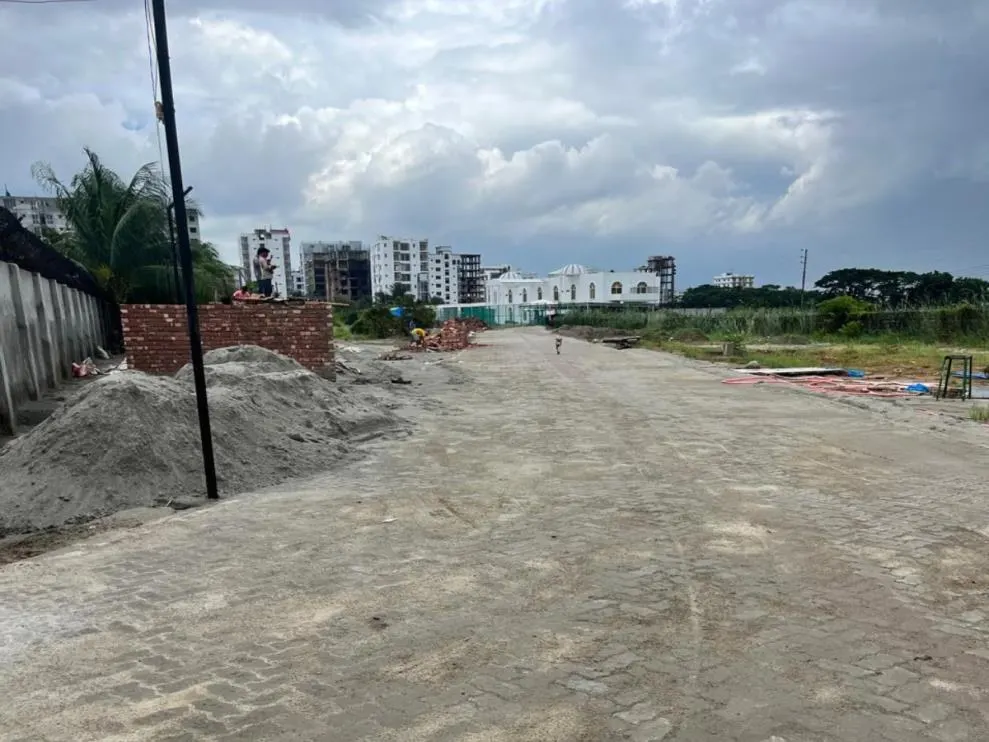
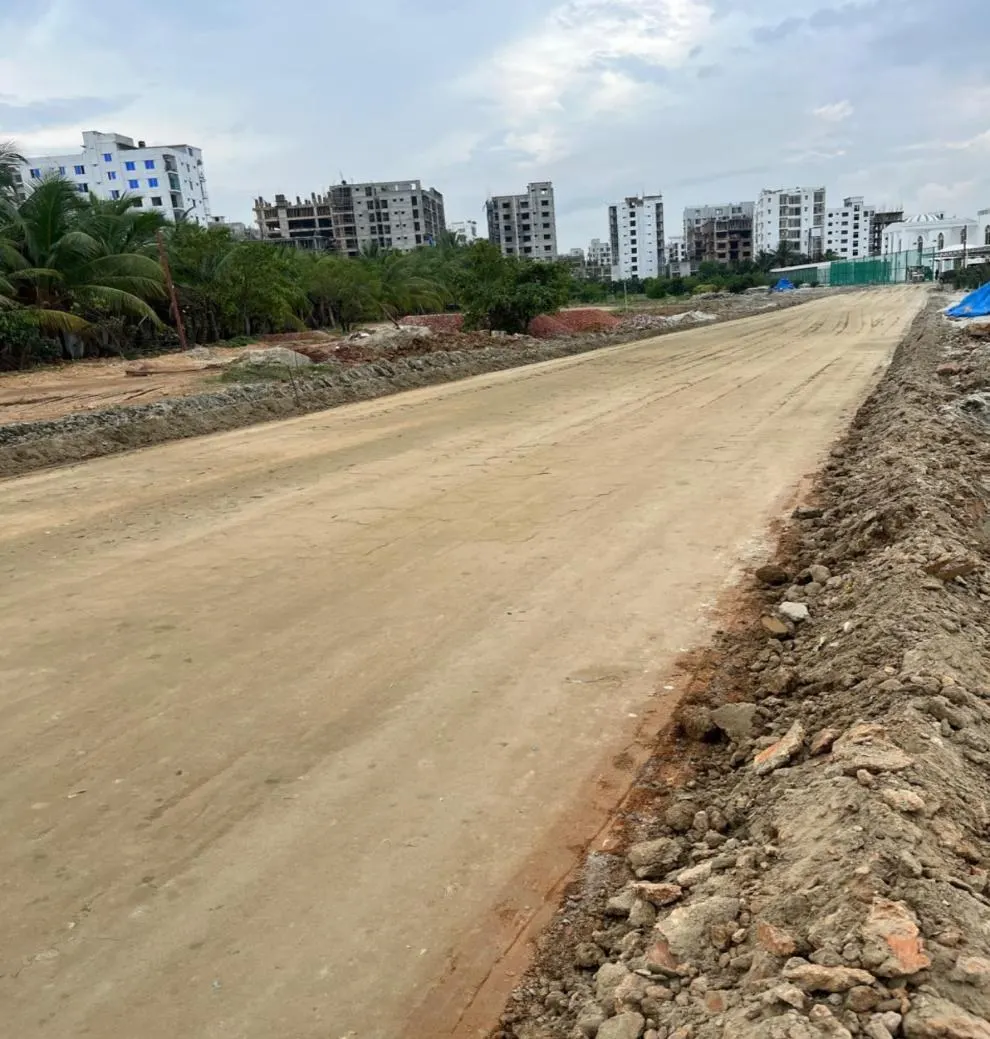
What you get is a road base engineered out of the site's own soil. No quarried stone trucked in. No sub-base. No brick soling. S&T Enterprise holds the Bangladesh partnership — and has built it here, on sandy soil, through a monsoon.
15–30%
Lower cost
Aggregate purchase and trucking disappear from the bill of quantities. The sub-base layer is eliminated entirely, and the finished road needs far less maintenance.
~50%
Faster to build
With proper automatic equipment a crew places 15 metres of 2 m-wide base per minute — 3 to 4 kilometres an hour. The road opens to traffic within one or two days.
2–3×
Longer service life
Lower liquid limit and plasticity index, higher unconfined compressive strength, and a base that is impervious to water. Roads last two to three times longer.
0
Aggregate trucked in
No quarried stone, no fired bricks, no convoy of tippers. Fewer construction days means less noise, water and air pollution on every kilometre built.
The method
Eight steps from raw ground to open road.
The sequence is the same whether it is 110 metres in Dhaka or a county road in Texas. Only the machinery scales.
- 01
Assess and prepare
In-situ soil is taken to final elevation. Buried cables and pipelines are located first. Old asphalt can be recycled in place with no prior milling.
- 02
Scarify to depth
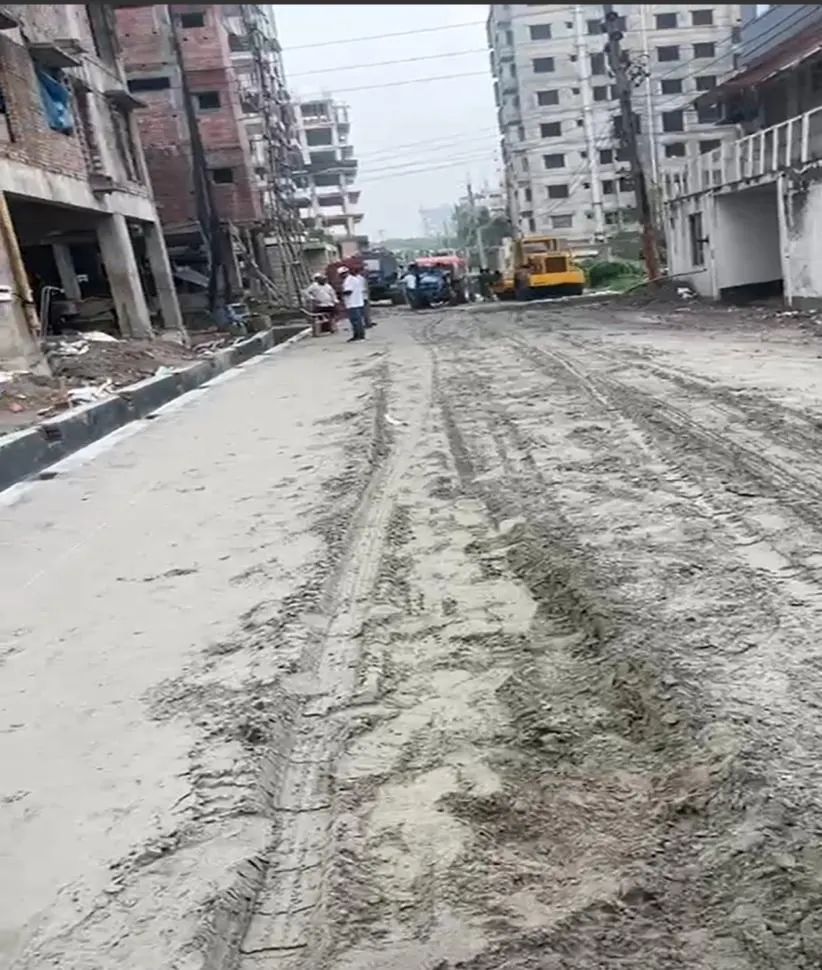
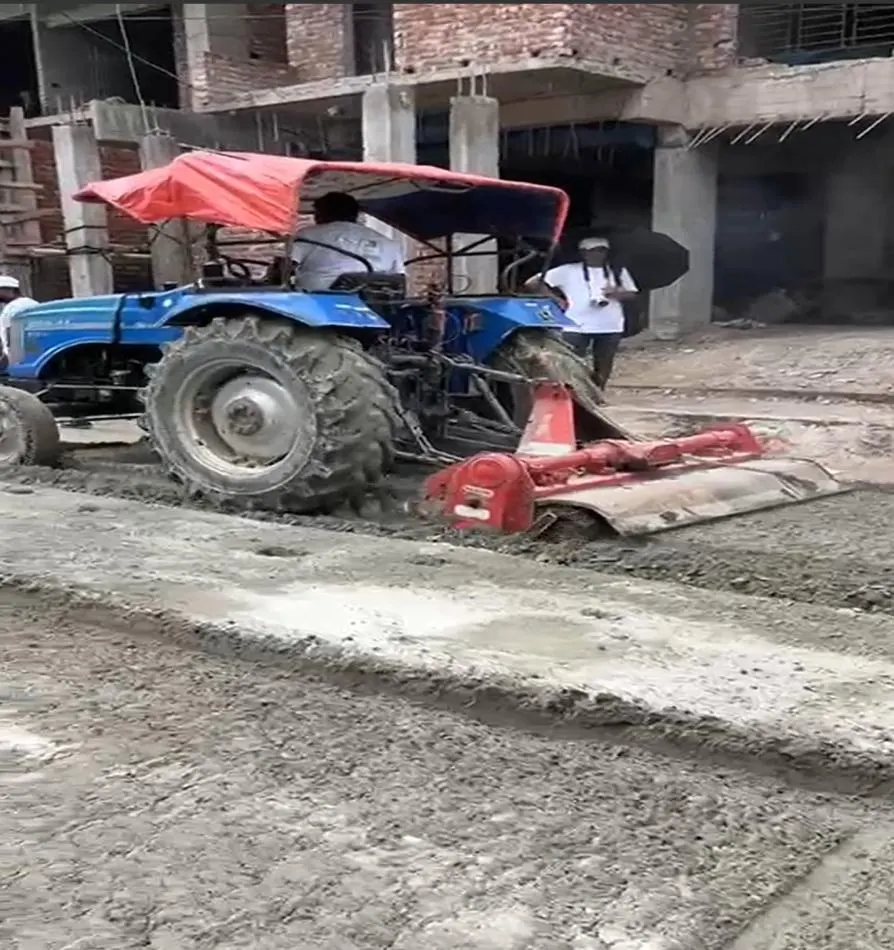
A tractor-drawn rotavator ploughs the alignment, breaking the ground to the design depth — 30 cm on the Priyanka demonstration.
- 03
Spread the dry additive
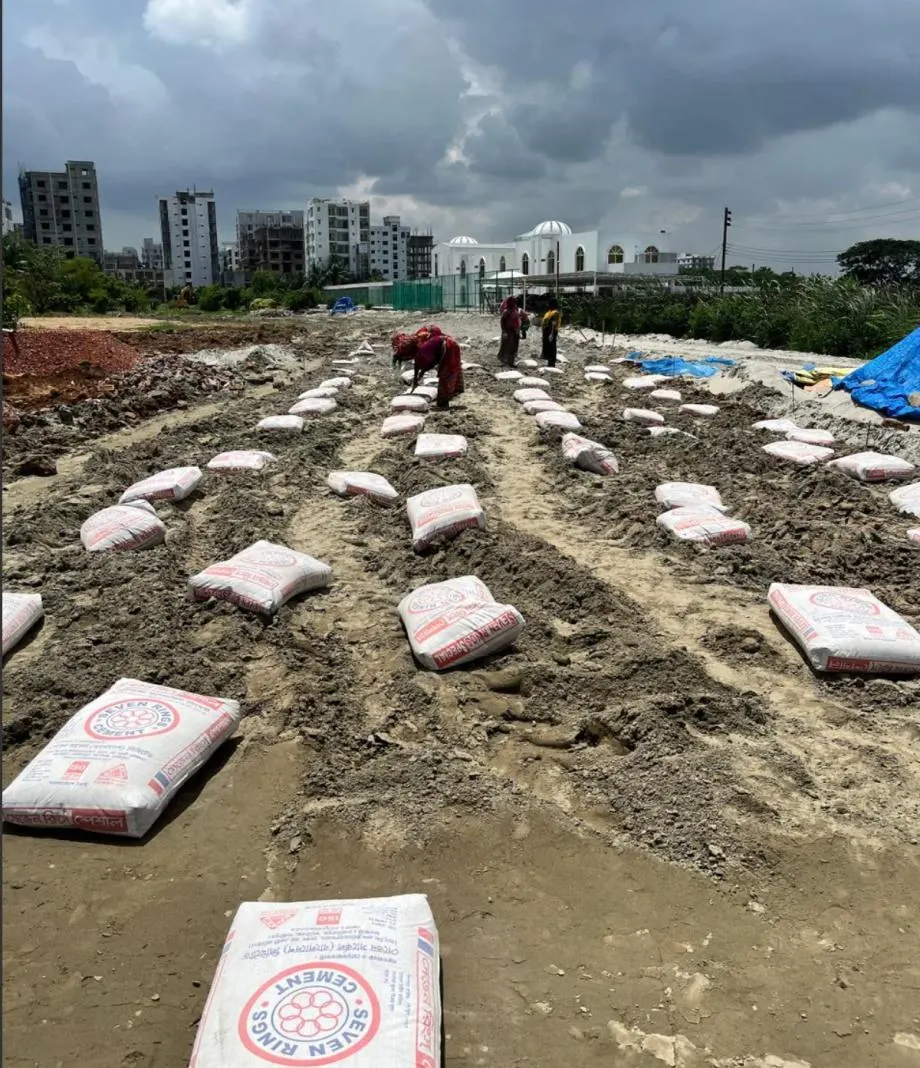
Cement, lime, LKD or CKD is spread at the design rate of 2–4%, chosen on local availability. On site the bags are set out on a measured grid.
- 04
Inject SoilBinder® solution
SoilBinder® is diluted 1:32 with sweet water — 14.5 fl oz of concentrate per cubic yard of soil — and injected as the mixer passes.
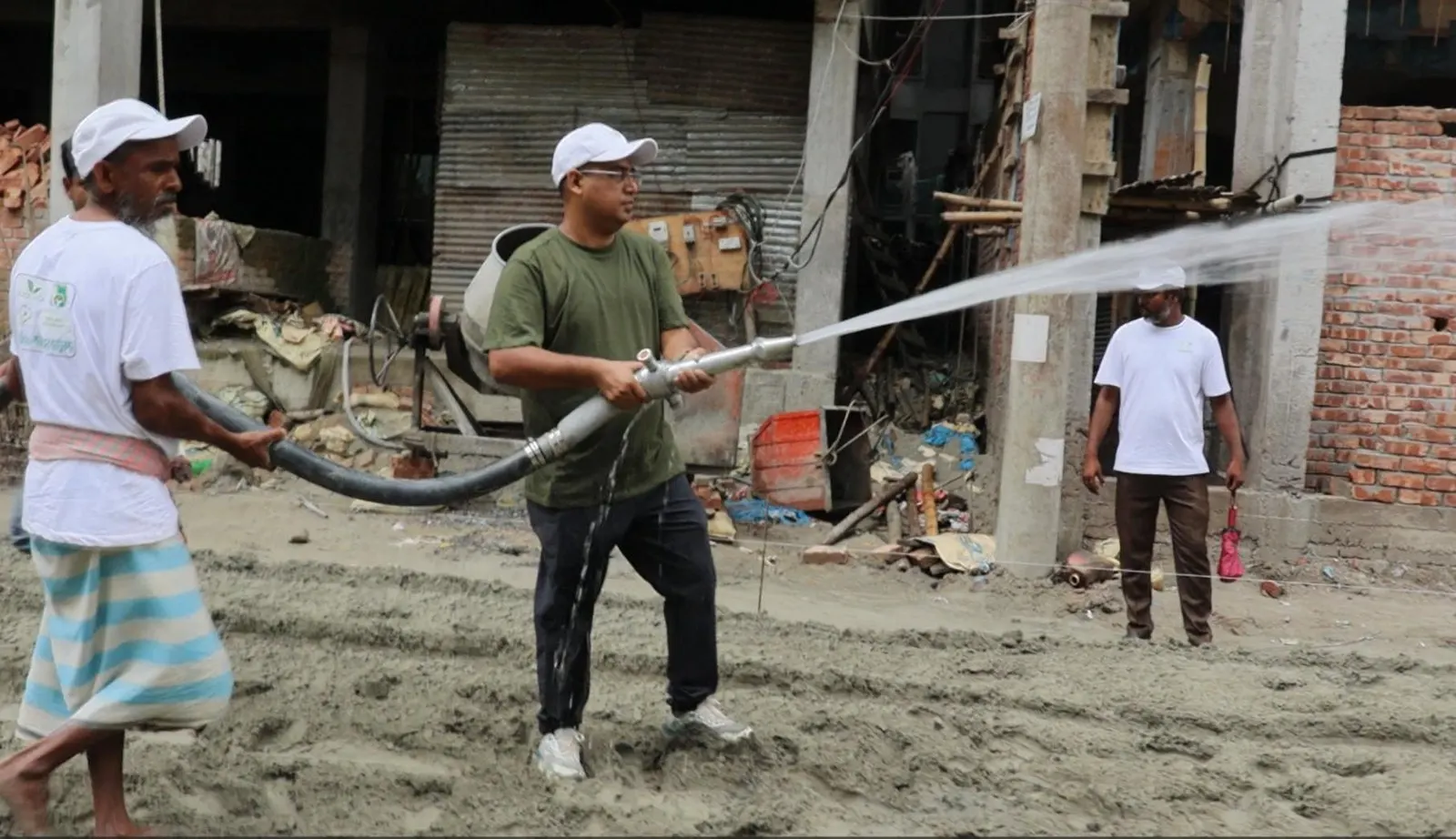
- 05
Mix to a homogeneous base
The reclaimer blends soil, additive and solution to full depth and full road width. The mix is brought to 98–102% of optimum moisture content for maximum density.
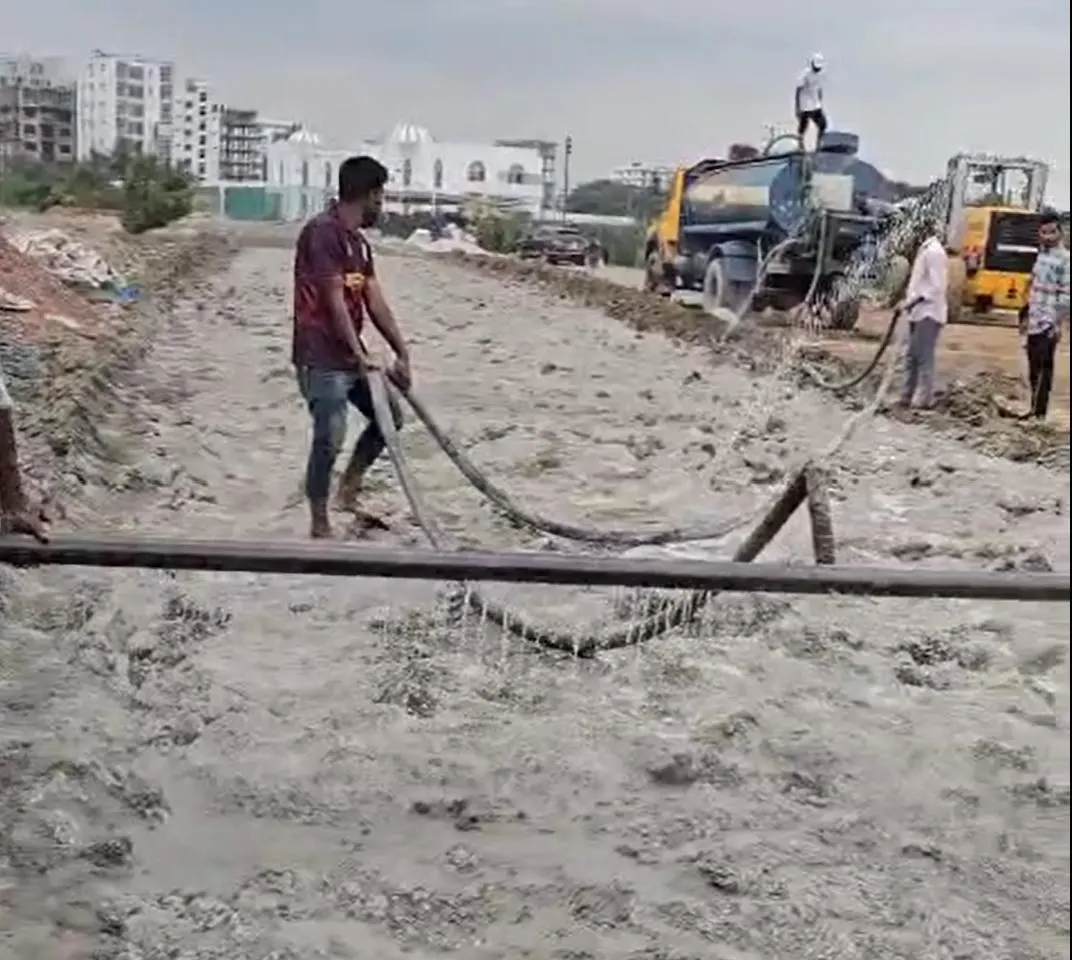
- 06
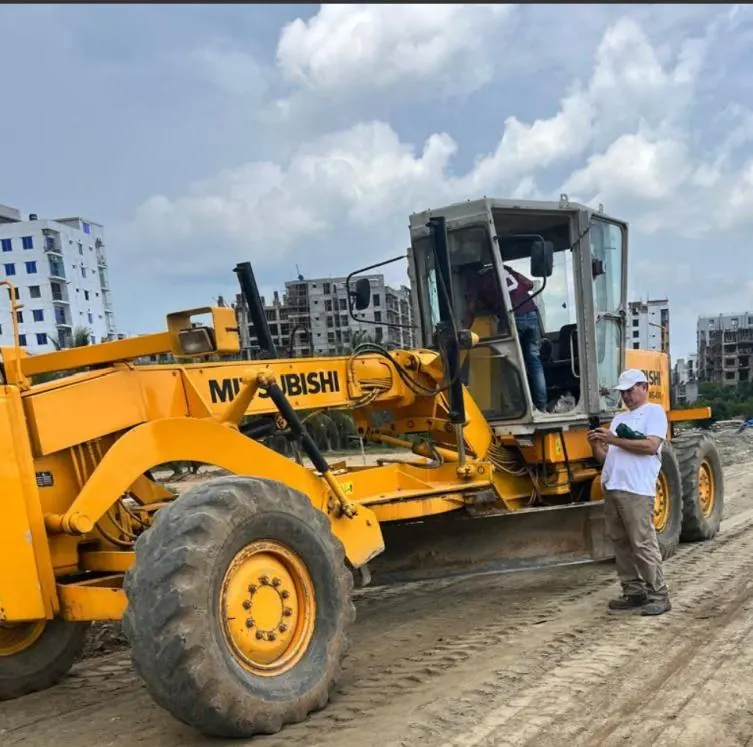
Compact and grade
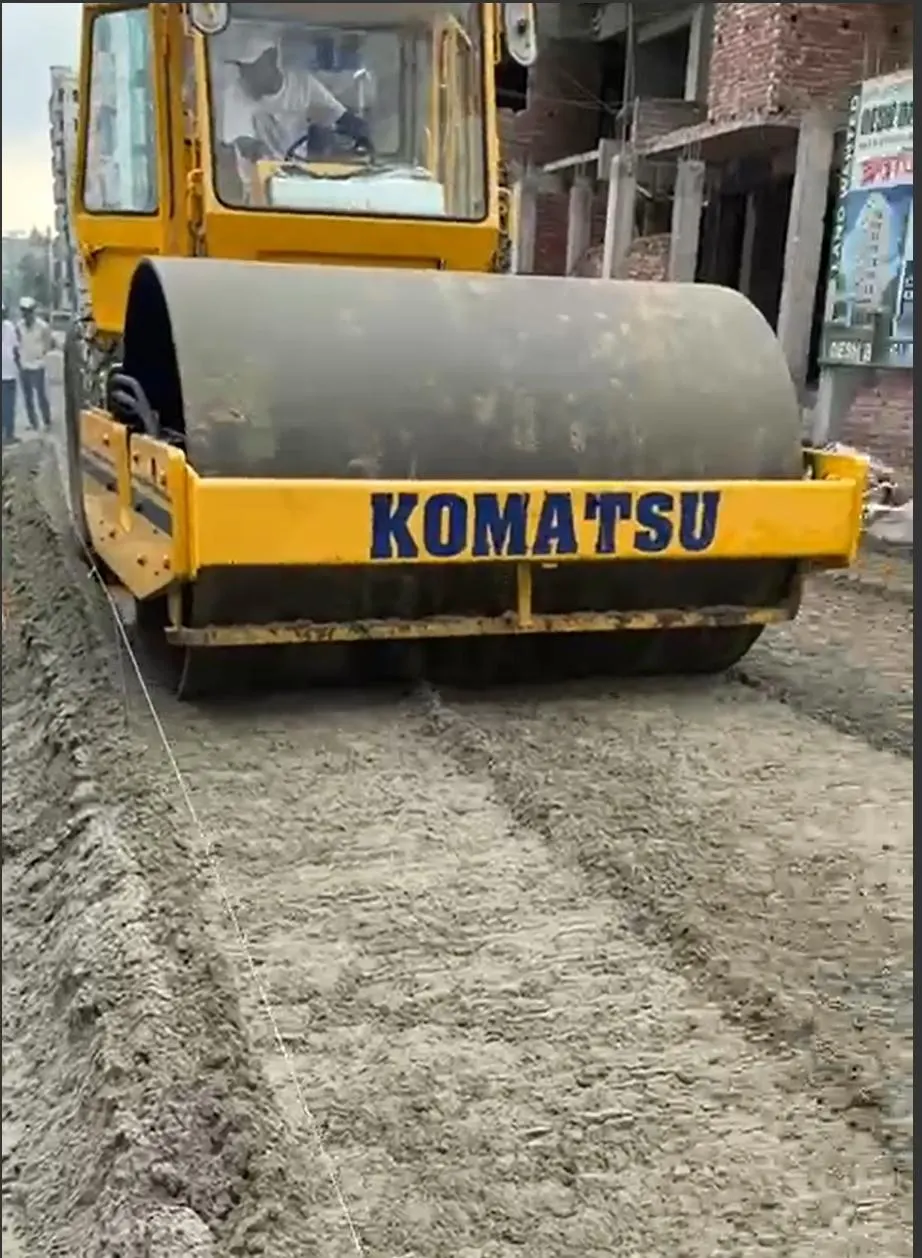
A 12-tonne smooth-drum vibratory compactor follows the mixer — about four passes to maximum density. The motor grader then cuts the crown and final levels.
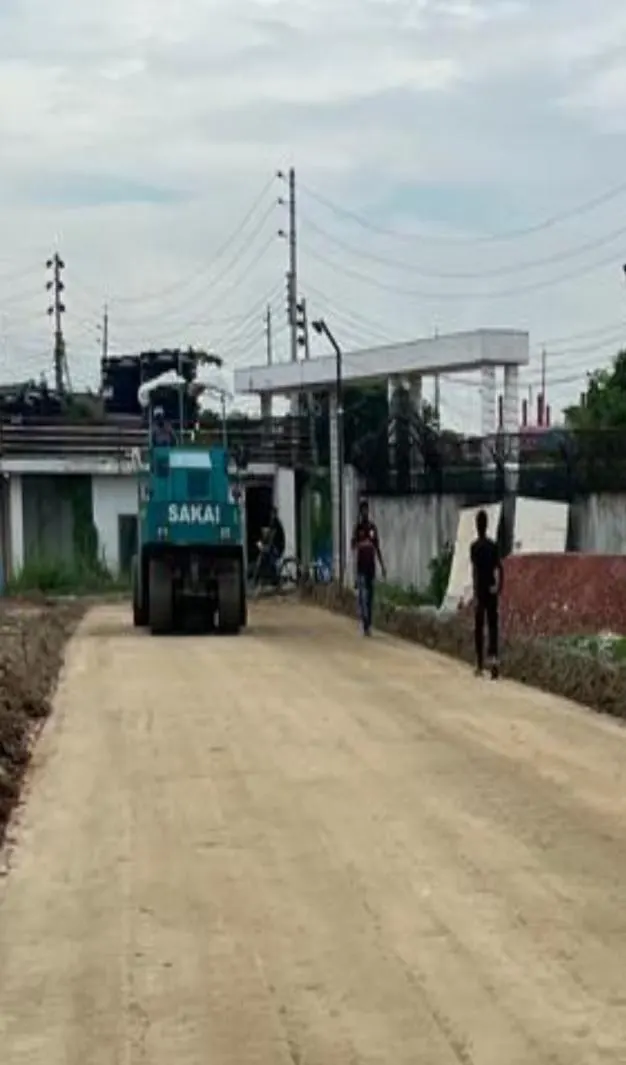
- 07
Seal and cure
Pneumatic tyre rollers seal the surface for release to traffic. Light hydration during curing is recommended in hot weather or on sandy soils.
- 08
Open, or surface it
The base carries traffic within hours of reaching density. Where a wearing course is wanted, chip seal, HMA, concrete or paver blocks all sit directly on it.
Specification
Numbers an engineer can check.
Effectiveness is evaluated using conventional AASHTO and ASTM standards — the same tests already written into your specification.
- Soil classes treated
- 16 of 17 AASHTO classes — all except A-8 peat
- Dilution
- 1 : 32 with sweet water
- Dose
- 14.5 fl oz of concentrate per cubic yard of soil
- Dry additive
- Cement, lime, LKD or CKD at 2–4%
- Moisture at compaction
- 98–102% of optimum moisture content
- Design depth
- 20 cm light · 25 cm medium · 30 cm heavy traffic
- Production rate
- ≈ 3,000 m² per 8-hour shift with a modern equipment train
- Safety profile
- Non-toxic · non-allergenic · non-flammable · non-corrosive
Questions
Straight answers.
Anything not covered here, ask us directly — we would rather have the conversation than leave you guessing.
Ask a question What is SoilBinder® and how does it work?
SoilBinder® is a liquid concentrated soil stabilizer from Dutch Agro. Diluted 1:32 with water and mixed into the ground with a small percentage of cement or lime, it reduces the liquid limit and plasticity index of the soil while raising its unconfined compressive strength and making it impervious to water. The result is an engineered road base made from the soil already on site.
Which soils can be stabilized?
SoilBinder® treats 16 of the 17 AASHTO soil classifications — everything except A-8 peat. That includes expansive clays, beach sand, silty sands and vertisols. Effectiveness is evaluated using conventional AASHTO and ASTM standards.
How much does SoilBinder® road construction save?
Typically 15% to 30% against traditional methods. The savings come from eliminating aggregate purchase and trucking, removing the sub-base layer entirely, finishing roughly 50% faster, and cutting long-term maintenance because the base lasts two to three times longer.
How quickly can a road be opened to traffic?
One to two days. With a properly equipped crew the mixing train places about 15 metres of 2 m-wide base per minute — three to four kilometres per hour — and a modern set of machinery stabilizes roughly 3,000 m² per eight-hour shift.
Is SoilBinder® safe and environmentally sound?
It is non-toxic, non-allergenic, non-flammable and non-corrosive. Environmentally it removes the diesel burn of aggregate haulage, removes fired bricks from the road structure, and shortens the construction window — cutting noise, water and air pollution per kilometre built.
What equipment does S&T Enterprise have available?
Thirty classes of plant, including crawler cranes from 50 to 200 tonnes, mobile cranes 20–50 tonnes, excavators from 0.5 to 0.9 m³ plus 58 and 60 ft long-boom units, 36 m concrete pump trucks, dozers, soil compactors, rollers, forklifts 3–10 tonnes, 40 ft low-bed trailers and water trucks from 10,000 to 20,000 litres.
Where does S&T Enterprise operate?
Across Bangladesh, from our base in Uttara, Dhaka. We have mobilized to bridge, railway, airport, power plant, deep-sea port and highway projects nationwide.
Want it proved on your own ground?
We run stabilization trials on site — your soil, your alignment, your engineers watching. Tell us the location and the road length.